Today was fun and exhausting. It started with a visit to a cattle spraying facility out in the savanna. Ol Pejeta Conservancy is one of the only ones which actively integrate livestock with wildlife. It is a fascinating approach that has been very successful.
Part of the setup is that they have “boma,” or portable metal corrals, that house the cattle at night. These can be moved throughout the conservancy based on the condition of the pasture and the location of the lion pride. Each boma can hold a herd of around 150 head of cattle, and have both lights and two rangers to scare the lions away. Rangers even receive an end of year bonus if they have no lion attacks on their herd that year.
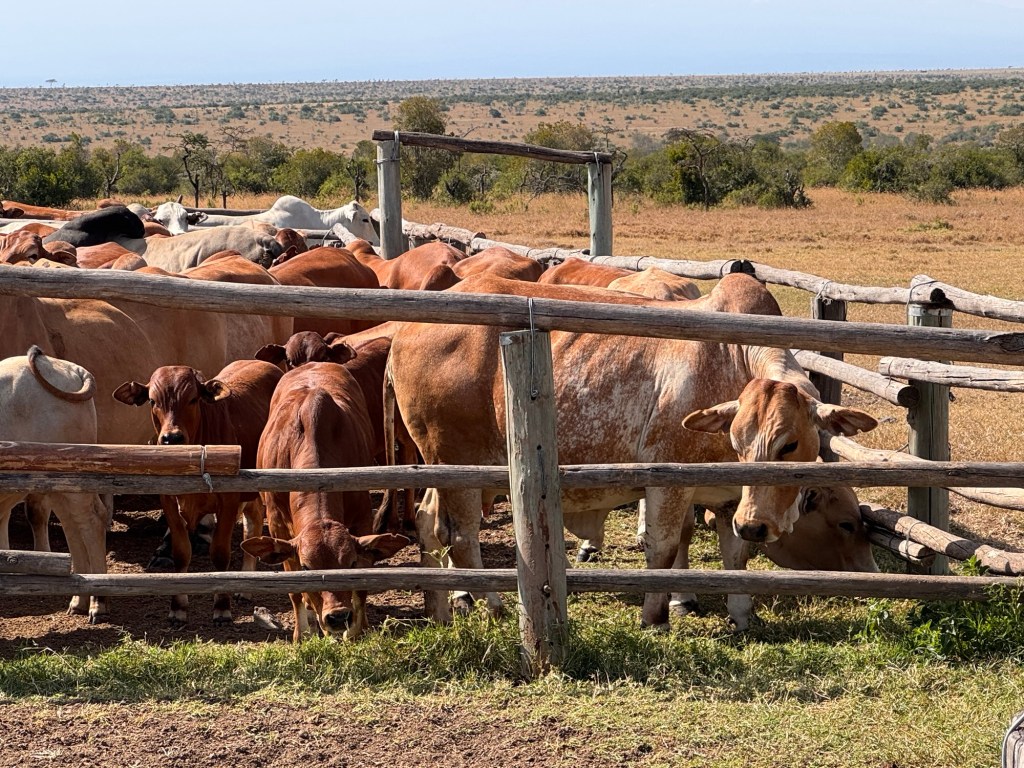
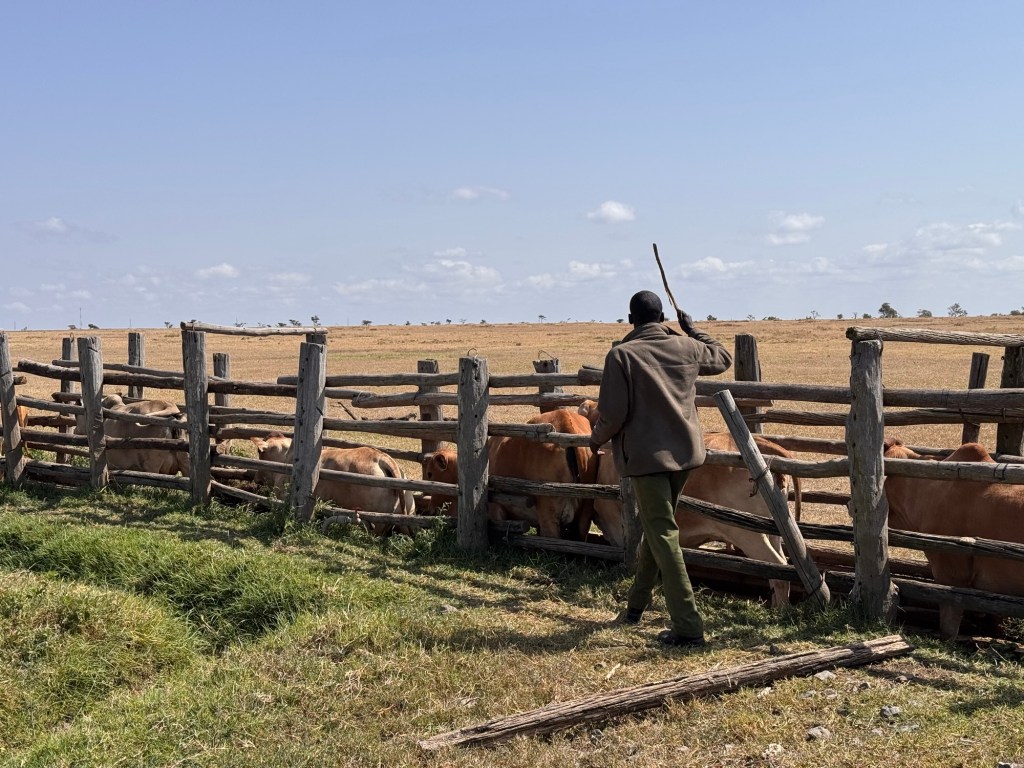
The part we participated in was the tick removal process. we helped herd the cattle from a corral, through a chute, and into a concrete building where they are sprayed for ticks. They are then separated into two drying pens, then combined into the final corral once dried. Then that herd returns to the range while the next herd begins the process.

Murphy helped prod the cattle through the chute with a stick, while I waved, yelled, and slapped some cow butt to keep them heading the right way. I got a nod from our ranger, and even a thumbs up and a grin from one of the cattle rangers for turning a couple reluctant cattle back to the chute. Thanks Cody and Ernie at the Odell Ranch for the crash course! Boran cattle poop on my boots is the first legit stain from the trip, and well earned.
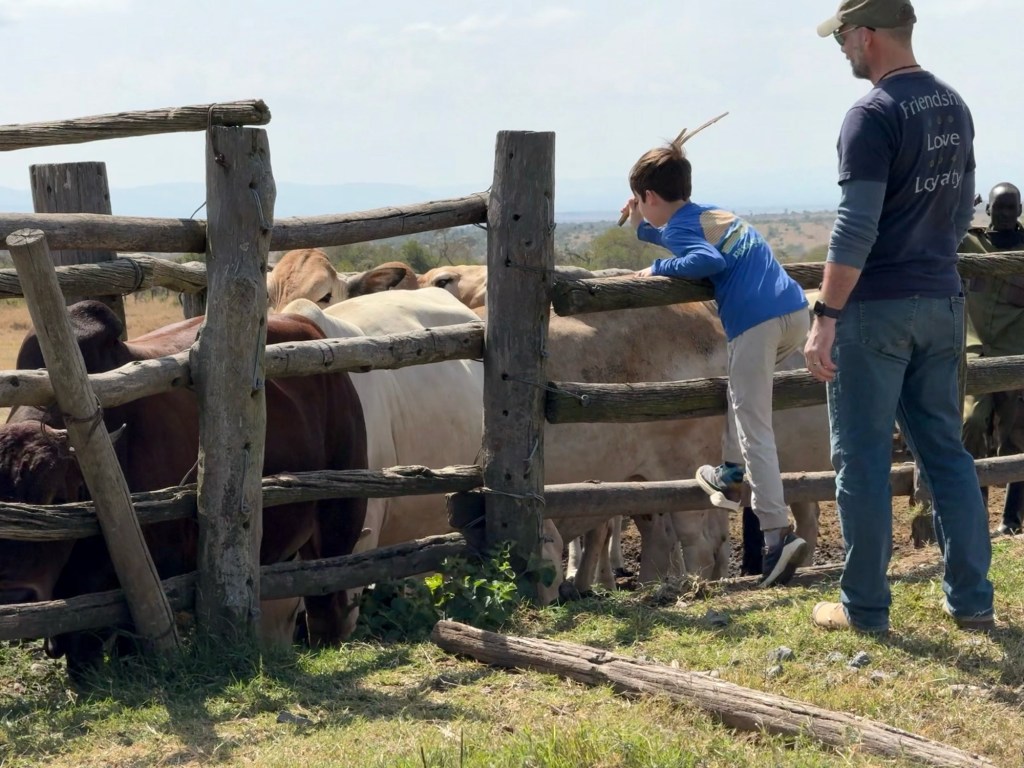
Our conservancy ranger that day told us that they have around 7,000 Boran cattle primarily used for beef production, and a smaller number of Ankole cattle “for decoration.” During droughts they allow ranchers in the surrounding communities to use the savanna pastures Aton a ‘at your own risk’ basis – they simply don’t have the rangers or the boma available to protect the community cattle as well. However, opening the conservancy to the community during drought has been one of the outreach programs that has helped build a positive relationship between Ol Pejeta and the surrounding communities.
After herding cattle we went to the conservancy headquarters for a presentation. We learned the background of the conservancy, talked more about their unique livestock integration, and got an overview of all the efforts made to support their mission and build community support. Their educational outreach program is particularly strong – our presenter was a student in one of the schools they sponsor, and is now a full believer in the mission of Ol Pejeta.
Discover more from Riding The Currents
Subscribe to get the latest posts sent to your email.
 Riding The Currents